
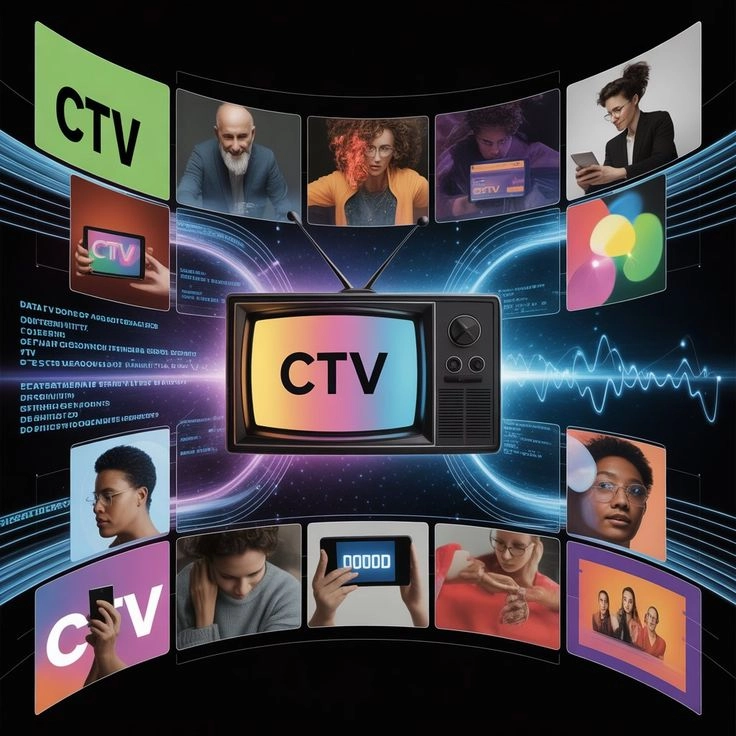
Shoppable video advertising
Uncategorized

Shoppable Video and CTV: Turning Streaming Ads Into Direct Response

1.When the Screen Becomes a Storefront Shoppable video advertising. For years, television advertising followed a simple model: brands created commercials, audiences watched them, and marketers hoped that exposure would eventually influence a purchase. However, the rise of connected television (CTV) and digital streaming has fundamentally changed that relationship. Today, viewers do not simply watch content; they interact with digital experiences across smart TVs, streaming platforms, mobile devices, and other connected screens. As a result, shoppable video is transforming advertising from a passive viewing experience into an interactive customer journey. Instead of asking viewers to remember a brand and search for it later, marketers can create experiences that move audiences from discovery toward consideration and, ultimately, action. This development creates an important opportunity for brands that want to combine the storytelling power of video with the measurable performance of digital advertising. 2.What Is Shoppable Video? Shoppable video allows viewers to interact with products or services directly through video content. Depending on the platform and format, viewers may click, scan a QR code, select a product, visit a landing page, explore a catalog, or complete another action after seeing an advertisement. Traditionally, video advertising separated inspiration from conversion. A viewer might watch a thirty-second commercial, become interested in a product, and then leave the platform to search for it independently. Shoppable video reduces that distance. Instead, it connects the advertisement with the next stage of the customer journey. Consequently, marketers can design video campaigns around a more complete objective. Rather than measuring success only through views or reach, they can encourage meaningful interactions and evaluate what happens after the audience engages with the advertisement. 3. CTV Is Changing the Meaning of Television Connected TV (CTV) refers to internet-connected TVs and devices that stream digital content, offering advanced targeting, interactive experiences, and better audience measurement than traditional TV. This creates an interesting combination. Television has always offered powerful storytelling, while digital advertising has provided measurable interactions. CTV brings these strengths closer together. Therefore, brands can use high-quality video storytelling while applying many of the principles that marketers already use in digital campaigns. Moreover, viewers increasingly expect personalized and convenient digital experiences. They can pause, search, select, subscribe, purchase, and explore content across connected devices. Advertising can follow the same direction by becoming more useful and interactive instead of simply interrupting entertainment. 4.From Brand Awareness to Immediate Action Brand awareness remains essential. However, marketers increasingly want to understand what happens after someone sees an advertisement. A campaign may generate millions of impressions, but impressions alone cannot explain whether the audience considered the product, visited a website, or eventually purchased something. Shoppable video introduces a more direct path between exposure and action. For example, a fashion brand could show a short product video and allow viewers to scan a QR code to explore the collection. Similarly, a technology company could demonstrate a new device and direct interested viewers to a product page. Therefore, the advertisement becomes more than a message. It becomes an entry point into the customer journey. This approach allows marketers to connect storytelling with measurable behavior while still preserving the emotional impact of video. 5. The QR Code Is Only the Beginning QR codes have become a practical bridge between television screens and personal devices. A viewer can scan a code displayed during a commercial and continue the experience on a smartphone. This simple interaction can connect a large-screen advertisement with a mobile shopping experience. However, marketers should not treat QR codes as the entire strategy. A QR code only works when the audience has a compelling reason to scan it. Therefore, the creative should clearly communicate what viewers will receive after taking action. For instance, marketers could offer product details, exclusive content, a special promotion, an interactive experience, or a direct shopping opportunity. The call to action should feel like a natural continuation of the advertisement rather than an additional instruction forced into the final seconds. 6. Creative Strategy Matters More Than Technology Technology can make an advertisement interactive, but technology alone cannot make it effective. The creative idea must give the audience a reason to engage. A strong shoppable video should begin with a clear story or valuable proposition. Then, it should introduce the product naturally and provide a simple next step. If viewers need to understand complicated instructions before they can interact, many will simply continue watching or leave. Furthermore, marketers should design the creative around the viewing environment. CTV audiences often sit farther away from the screen than mobile users. Consequently, text, buttons, QR codes, and visual instructions must remain clear and recognizable from a television viewing distance. The best campaigns therefore combine strong storytelling, simple interaction, clear branding, and a compelling call to action. 7. Personalization Makes Streaming Ads More Relevant For example, a brand can develop different creative versions for different audience groups. One viewer might see a product-focused message, while another might see an introductory brand story. Depending on the platform and available capabilities, marketers can use contextual, behavioral, geographic, or other appropriate signals to improve relevance. One of the major advantages of CTV advertising involves audience targeting. Traditional television often delivered the same advertisement to a broad audience. Digital streaming environments, however, can support more sophisticated audience strategies. However, personalization requires discipline. Marketers should not make the experience feel intrusive or overly complicated. Instead, they should use audience insights to make the advertisement more useful. As a result, effective CTV personalization should feel less like surveillance and more like relevance. 8. Measurement Moves Beyond Views Video marketers have traditionally relied on metrics such as impressions, reach, completion rate, and view-through rate. These metrics remain valuable because they indicate whether an audience actually consumed the creative. Nevertheless, shoppable video introduces additional performance signals. Marketers can evaluate interactions such as QR scans, clicks, landing-page visits, product exploration, sign-ups, add-to-cart actions, and conversions when the technology and platform support those measurements. This expanded measurement framework helps marketers understand the relationship between media exposure and customer behavior.


Retail media strategy
Uncategorized

Retail Media Networks Explained for Marketers Outside Retail: The New Advertising Space You Cannot Ignore

1.The Store Became a Media Channel Retail media strategy .For decades, marketers viewed retailers primarily as places where consumers purchased products. A supermarket, department store, marketplace, or e-commerce platform served a straightforward purpose: it connected products with shoppers. However, that relationship has changed significantly. Today, retailers can also function as powerful advertising platforms because they possess something many media companies struggle to obtain: direct access to consumers at the moment they demonstrate purchase intent. This transformation has created Retail Media Networks, commonly known as RMNs. A Retail Media Network allows a retailer to sell advertising opportunities across its website, mobile application, physical stores, customer communications, and other digital properties. Consequently, brands can reach consumers using retailer-owned data and advertising inventory while they actively research or purchase products. For marketers outside the retail industry, this development deserves attention. Although RMNs originated strongly within commerce and consumer packaged goods, their underlying principles apply much more broadly. The combination of audience data, measurable intent, first-party information, and closed-loop measurement can influence how many businesses approach advertising in the future. 2.What Exactly Is a Retail Media Network? A Retail Media Network is an advertising ecosystem operated by a retailer or commerce platform. The retailer uses its digital and physical customer touchpoints to provide advertising opportunities to brands. These opportunities may include sponsored product placements, display advertisements, search advertisements, homepage placements, email promotions, in-store screens, and other formats. The important distinction lies in the data behind these advertising placements. Retailers can understand what consumers search for, what products they view, what they purchase, how frequently they purchase them, and sometimes how their shopping behavior changes over time. Therefore, advertisers can use retail environments to reach audiences based on real commercial behavior rather than relying exclusively on broad demographic or interest-based targeting. For example, an online marketplace might allow a consumer electronics company to promote a product when shoppers search for laptops. The advertiser does not simply reach someone who fits a general demographic profile. Instead, the brand reaches someone who has demonstrated an active interest in purchasing a particular catego 3.Why Retailers Suddenly Look Like Media Companies Retailers have always owned valuable customer relationships. However, digital commerce has transformed that relationship into measurable data. Every search, product view, cart addition, purchase, and repeat transaction can contribute to a much clearer picture of customer behavior. At the same time, changes in digital advertising have increased the importance of first-party data. Privacy expectations, browser restrictions, platform changes, and evolving tracking practices have made traditional audience targeting more complicated. Consequently, retailers can offer something highly valuable: authenticated customer interactions connected directly to commerce. Retailers also possess enormous amounts of purchase-intent information. A person searching for running shoes on a retail platform has demonstrated a different level of intent from someone who casually watches a running video on a social media platform. This difference makes retail media particularly attractive to performance-focused marketers. 4.The Real Power: Advertising Meets Purchase Intent Traditional advertising often tries to create demand before a consumer actively considers a purchase. For instance, a brand may use social media or video advertising to introduce a product to a broad audience. That strategy remains valuable because awareness can influence future purchasing decisions. Retail media operates differently. It can place an advertisement directly inside an environment where consumers already demonstrate shopping behavior. Therefore, marketers can potentially move from awareness to consideration and conversion within a connected ecosystem. Consider a consumer searching for “wireless headphones.” A sponsored result appearing within that search has a natural relationship with the user’s immediate need. The advertisement does not interrupt an unrelated activity; it participates in the shopping journey. As a result, RMNs can provide advertisers with a strong connection between media exposure and commercial activity. This connection represents one of their most important advantages. 5.Retail Search Is Becoming Advertising Real Estate Search has always played an important role in digital marketing. However, retail search operates within a highly commercial environment. When consumers search for products on a marketplace or retailer website, they often move closer to a purchasing decision. Retailers can therefore monetize search results through sponsored listings and promoted products. Brands can bid for visibility while competing for valuable positions within product discovery experiences. This creates a familiar concept for marketers who already understand search engine marketing. Nevertheless, retail search introduces an important difference: the search takes place inside an environment connected directly to products and transactions. Consequently, marketers should approach retail search with the same strategic discipline they apply to paid search. They should understand keyword intent, evaluate competition, monitor conversion rates, manage budgets, and continuously optimize campaigns. 6.First-Party Data Changes the Equation One of the strongest foundations of a Retail Media Network is first-party data. Retailers collect information through direct customer relationships rather than relying entirely on external tracking systems. This data can help retailers understand purchasing patterns, product interests, customer frequency, category behavior, and other commercial signals. Therefore, brands can potentially reach audiences using information that reflects actual consumer activity. However, marketers should not assume that more data automatically produces better marketing. The quality, relevance, privacy practices, and responsible use of data matter considerably. Advertisers should work with retail partners that maintain clear policies and provide appropriate controls. Moreover, marketers should focus on meaningful audience signals instead of simply pursuing the largest possible audience. A smaller audience with strong purchase intent can sometimes deliver more value than a large audience with weak commercial relevance. 7.Closed-Loop Measurement Makes RMNs Different One of the biggest challenges in advertising involves proving what happened after an advertisement was viewed. A consumer may see an advertisement on one platform and purchase a product through another channel. As a result, marketers often need complex attribution systems to estimate the relationship between exposure and conversion. Retail media can simplify part of this challenge because the advertising platform and transaction environment can exist within the same ecosystem. A retailer may be able to connect advertising exposure with product views, purchases, and other commercial outcomes. This creates

AI search optimizationAI search optimization
Uncategorized

Optimizing for AI Answer Engines, Not Just Google: The New Search Strategy for Digital Marketers

1. The Search Box Has Changed AI search optimization. For years, digital marketers built their search strategies around Google. Businesses researched keywords, optimized pages, built backlinks, improved technical SEO, and competed for positions on search engine results pages. That approach remains important; however, the way people discover information is changing rapidly. Today, users increasingly ask AI systems complete questions instead of entering short keyword phrases. They expect direct explanations, comparisons, recommendations, summaries, and solutions. Consequently, digital marketers now need to think beyond traditional rankings and consider how their content can become part of an AI-generated answer. This shift does not mean that Google has become irrelevant. Instead, it means that search optimization has expanded. A strong digital strategy must now prepare content for traditional search engines as well as AI answer engines. 2. From “Where Do I Rank?” to “Will I Be Mentioned?” Traditional SEO often focuses on a simple question: Where does my website rank? AI search introduces a different question: Will the AI system consider my information useful enough to include in its answer? That difference changes how marketers measure visibility. A page can rank well for a particular keyword but still provide little value when an AI system searches for a detailed answer. Therefore, marketers must create content that directly addresses questions, explains concepts clearly, demonstrates expertise, and provides information that an AI system can understand and connect with a user’s intent. Moreover, AI answer engines often combine information from multiple sources before presenting a response. As a result, marketers should not focus exclusively on owning one keyword. They should build a strong information ecosystem around their subject. 3.The Rise of Answer-First Content Search behavior is becoming more conversational. Instead of typing something like “best digital marketing agency Kochi,” a user might ask, “What should a small business look for when choosing a digital marketing agency in Kochi?” The second query reveals much more about the user’s intention. It asks for guidance rather than a simple list of websites. Therefore, effective content should anticipate these natural questions and provide useful answers in a structured format. Answer-first content should place valuable information close to the beginning of a section. Instead of spending several paragraphs introducing a topic before answering the question, marketers should provide the answer clearly and then explain the reasoning behind it. This approach improves readability for humans while also making important information easier for AI systems to identify. 4.Keywords Still Matter, But Context Matters More Keywords remain an important part of SEO. However, modern search optimization requires more than repeatedly placing a target phrase throughout an article. AI systems can understand relationships between concepts, topics, entities, questions, and answers. Therefore, a page about SEO should not simply repeat the word “SEO.” It should naturally discuss related subjects such as search intent, technical optimization, content quality, backlinks, crawling, indexing, structured data, user experience, and measurement. In other words, marketers should build topic depth rather than keyword density. Furthermore, semantic relevance allows a piece of content to answer several related questions without creating separate, thin pages for every variation of a keyword. This creates a stronger resource for both users and search systems. 5.Structure Your Content for Machines and Humans Great content needs great structure. AI answer engines must identify useful information within a page. Consequently, marketers should organize articles with descriptive headings, short paragraphs, logical sections, lists, tables where appropriate, and direct answers. For example, instead of writing one long section about social media advertising, a marketer could divide it into clear questions such as “What is social media advertising?”, “Why does it matter?”, “How much should a business spend?”, and “How can campaign performance be measured?” This structure creates multiple entry points into the subject. At the same time, it makes the content easier for a human visitor to scan and understand. Clear structure does not mean writing for machines instead of people. Rather, it means creating content that works well for both. 6.Become a Source Worth Citing AI answer engines need reliable information. Therefore, credibility has become increasingly important. A digital marketer should demonstrate who created the content, why that person or organization has relevant expertise, and where important claims come from. Original research, practical experience, expert commentary, transparent methodology, and trustworthy references can strengthen the authority of a page. For example, a marketer writing about advertising performance could provide original campaign observations, anonymized performance patterns, testing methods, or industry analysis instead of simply repeating information found elsewhere. Most importantly, brands should avoid creating content that merely summarizes what everyone else has already published. Original insight gives AI systems and human readers a stronger reason to recognize a source as valuable. 7.Build Content Around Real Questions One of the most effective ways to prepare for AI search is to understand the questions your audience actually asks. Start with customer conversations. Look at sales calls, support questions, social media comments, community discussions, search queries, and frequently asked questions. These sources reveal the language people naturally use when they need help. Then transform those questions into useful content. For example, instead of creating a generic article titled “Digital Marketing Services,” a marketer could create detailed resources such as “How Much Should a Small Business Spend on Digital Marketing?” or “Which Digital Marketing Channel Should a New Business Start With?” As a result, the content becomes more closely connected to real search intent rather than an artificial keyword list. 8.Make Every Page Answer Something A strong website should not contain pages that exist simply because a content calendar demanded another article. Every page should have a clear purpose. A service page should explain the service and its value. A blog post should answer a meaningful question. A case study should demonstrate results and methodology. An FAQ should address genuine concerns. A landing page should guide visitors toward a specific action. Therefore, marketers should review existing content and ask a simple question: “what question does this page answer better than the alternatives?” If the answer is unclear,

Scroll to Top